
Repetition as Protection
We Have Always Lived in the CastleThis flow traces how repeated domestic acts create safety, become vulnerable to disruption, and are reassembled after the house is destroyed.
increasing Bearing strength in each event
 decreasing
Bearing strength in each eventdecreasingThe House Neatened
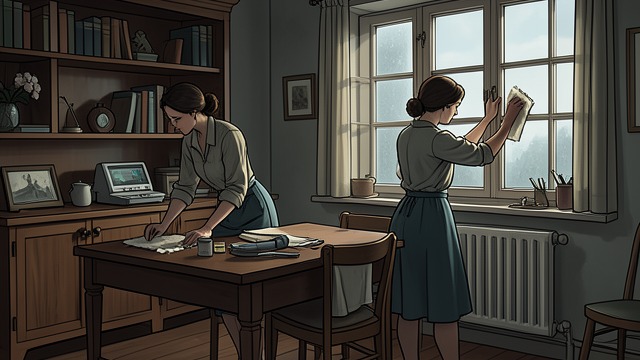
The House Neatened
Repetition restores order
Mary Katherine and Constance dust and clean the rooms, returning objects to their accustomed positions. The task is deliberately modest: the house is neatened rather than remade.
Care in the details
Their attention to furniture and inherited possessions expresses respect for the family’s accumulated life. The repeated work gives the sisters something dependable to do together.
Housekeeping serves as emotional structure as well as maintenance. It holds grief at a manageable distance by making the present resemble what came before.
The Cellar’s Stored Years
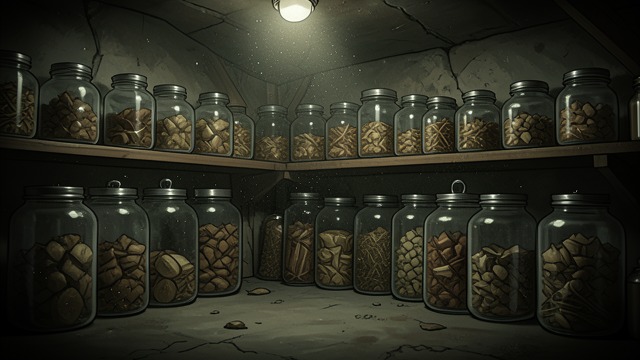
The Cellar’s Stored Years
Food preserved over generations
The cellar contains jars made by Blackwood women across several generations. Constance continues the practice, adding her own carefully arranged preserves to the family store.
Preservation and danger
The family does not eat the ancestral jars because Constance believes they could kill them. The cellar therefore holds both a record of care and a warning about the past.
Preservation makes time visible as rows of food. The household can keep its history close while drawing a firm line around what may safely be consumed.
A Broken Pitcher
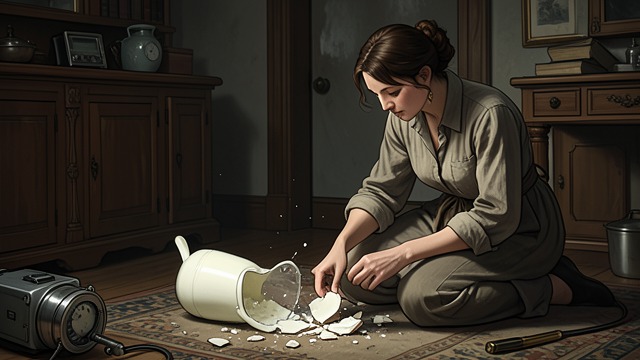
A Broken Pitcher
A disruption within routine
As Helen urges Constance toward a larger life, Mary Katherine breaks the milk pitcher in the kitchen. The domestic object carries the pressure she cannot express in the drawing room.
Replacement without resolution
Mary Katherine chooses a second pitcher and returns to the guests, restoring the surface of the tea service. Constance has heard the invitation, however, and the original order cannot simply be resumed.
The broken vessel shows the limits of routine. A familiar action can cover distress for the moment without undoing the possibility of change.
The Kitchen Ransacked
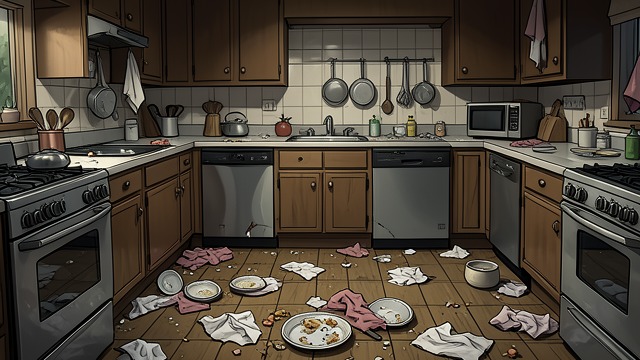
The Kitchen Ransacked
Careful arrangements destroyed
The villagers smash dishes, scatter food, and tear cloths from their places. Objects maintained through generations of domestic work are bent, broken, or soiled.
Ritual interrupted
The kitchen, once the most dependable center of the household, becomes a scene of disorder. Constance and Mary Katherine cannot immediately resume their old actions among the wreckage.
The destruction attacks more than property. It breaks the material conditions through which the sisters expressed care and continuity.
Neatening After Ruin
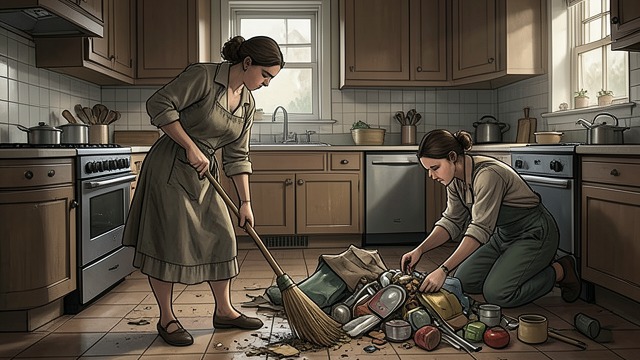
Neatening After Ruin
A new cleaning begins
Constance returns to the kitchen and starts clearing the floor, while Mary Katherine sets usable objects aside. They salvage a few cups and plates and recover food the crowd did not reach.
The ritual changes shape
The sisters cannot restore the rooms exactly as they were, so they move rubble into closed spaces and establish a smaller order. The act of cleaning makes the house habitable again.
Domestic ritual survives by adapting to loss. The sisters’ familiar care does not reverse destruction; it gives them a way to continue within it.
On the Monday before Charles arrives
During the weeks before Charles arrives
During Helen Clarke’s tea visit
The night the mob attacks the house
The morning after the mob attack
